

Fire Extinguishers
Fire Extinguishers – WP Extinguishers
WP Extinguishers offers fire extinguisher servicing and maintenance starting at £6.95. Regular maintenance of fire extinguishers is essential for safety and adherence to British regulations. Safeguard your premises effectively with the expert services provided by WP Extinguishers.
fire extinguisher suppliers
01256 960459
Fire Extinguisher Service and Maintenance Contract
It is a requirement under the Regulatory Reform (Fire Safety) Order 2005 that your fire extinguishers are serviced to ensure they continue to provide the protection required. We will contact you annually to arrange the inspection of your fire extinguishers by one of our certified engineers.
In the UK, it is a legal obligation to conduct an annual inspection of fire extinguishers, which must be carried out by a qualified technician performing a basic service to confirm that the extinguishers are fully operational. This service adheres to British Standard BS 5306-3 and involves checking the pressure gauge, weight, and tamper seal, as well as examining the cylinder and hose for any damage, with the inspection details documented on a service tag.
Fire extinguisher inspection / maintenance is crucial for ensuring safety and compliance with British standards. WP Extinguishers offer comprehensive services, including annual servicing, inspections, and surveys. These services typically include cleaning, spare part replacement, and certification. this can all be booked online here
Free Surveys: WP Extinguishers offer free fire extinguisher site surveys to assess your needs.
Service Certificates: A service certificate of Compliance is provided after Your Annual Service
Fire extinguisher Service – There is a site Attendance Fee of £40.00 then each Extinguisher is charged at £6.95.
Fire extinguisher commissioning – There is a site Attendance Fee of £40.00 then each Extinguisher is charged at £7.95.
Here’s a more detailed look at fire extinguisher maintenance:
Fire extinguisher Annual Servicing: All types of fire extinguishers require annual servicing to ensure they are in working order.
Fire extinguisher Basic Servicing: This involves a visual inspection, checks for pressure, weight, and condition, and the replacement of essential components like tamper tags and seals.
Fire extinguisher Service Intervals: Tests and intervals should be recorded on a label or tag attached to the extinguisher unit.

Independent Fire Engineering & Distributors Association
Accreditation IFEDA, the Independent Fire Engineering & Distributors Association, was founded in 1989, to provide an independent representative body of fire trade companies. IFEDA is completely unaligned to any manufacturer.
As a member, WP Extinguishers have had to demonstrate that the company has achieved and maintained a quality system in accordance with BS EN ISO 9001:2015
Also Passed examination in theory and practice of servicing portable fire extinguishers.
the examination has been approved by the british standards institution and bAFE as satisfying the training requirements of SP101.
Under the Regulatory Reform (Fire Safety) Order 2005, article 13, all business premises must install and maintain portable fire extinguishers. They must be of the right type for the identified risks and positioned in the correct locations with adequate signage. This also forms part of BS 5306 part 8.
Fire extinguishers come in various types and sizes, so it’s essential for your business to have the right ones to address specific risks and ensure they have sufficient power (rating) to handle potential fire situations. If you’re unsure about any aspect of your fire protection systems or their installation, our qualified team at WP Extinguishers are here to help.
Our dedicated engineers are approved and fully trained in compliance with BS5306 standards. We ensure all fire extinguishers are installed and commissioned in line with BS5306-8 and serviced according to BS5306-3, guaranteeing the highest level of safety and reliability.
Fire Extinguishers Q&A
Classes of Fire
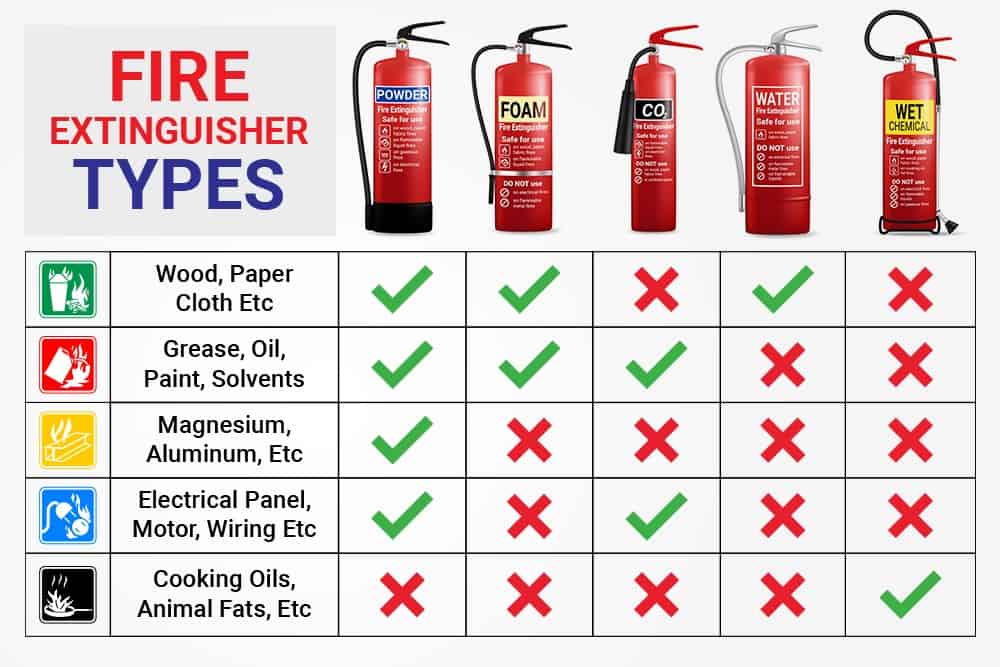
The elements that cause a fire – a dangerous combination of heat, oxygen and fuel – are consistent. But they never meet in precisely the same way. There will always be some variance in the amount of oxygen, temperature or fuel type. And it’s the difference in fuel that defines the class of fire.
There are six classes of fire, labelled from class A to class F (with one exception). The classes are:
- Class A (solid combustibles) – These fires are fuelled by solid combustible materials such as paper, wood or fabric. Generally, every workplace is at risk of a class-A fire as these materials will have a significant presence.
- Class B (flammable liquids) – These fires involve flammable liquids such as petrol or white spirits. Petrol forecourts are a prominent location vulnerable to class B fires. Restaurants, bars, hospitals, and laboratories are also at risk.
- Class C (flammable gasses) – These fires happen when flammable gases, such as propane or butane, ignite. Again, hospitals and laboratories are at a higher risk of class C fires than other workplaces, as are manufacturing or industrial sites.
- Class D (burning metals) – These occur when burning metals ignite, such as magnesium and sodium. Laboratories (again) or specific warehouses are at greater risk to this fire class.
- Electrical Fires – This fire class breaks the naming convention and is just called an electrical fire. These fires happen when live electrical equipment is involved, which puts almost every workplace at risk. Faulty (or misused) electrical equipment is one of the most common causes of workplace fires, so it pays to know which extinguishers you can use safely.
- Class F (cooking oils and fats) – The fires involve burning cooking oils and fats. Restaurants, kitchens and food-manufacturing sites are most at risk of class F fires.
Each fire requires a different type of extinguisher to safely put it out. Use the wrong kind and you won’t make any difference to the fire. Or you can make a dangerous situation significantly worse, putting yourself at greater risk or causing the fire to spread. Speak to WP Extinguishers today to stay Compliant
Types of Fire Extinguishers:
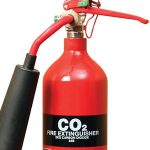
C02 Fire Extinguishers
Used for Class B fire risks – flammable liquids such as petrol, spirits and diesel and also Electrical hazards
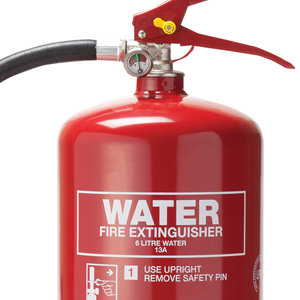
Water Fire Extinguishers
Used for class A fire risks such as as wood, paper, material and cloth
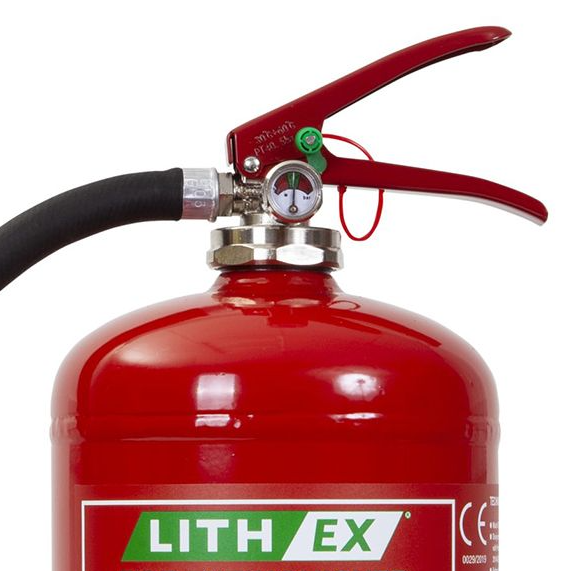
Lith-Ex Fire Extinguishers
For Class A and Electrical fires – designed specifically to tackle Lithium ion battery fires such as those found in mobile phones, tablets, laptops, toys, power tools and electric scooters.
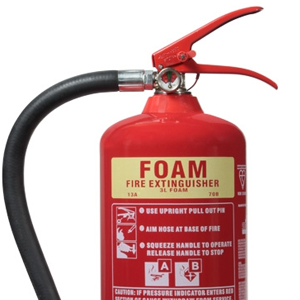
Foam Fire Extinguishers
Used for class A fire risks such as as wood, paper, material and cloth and class B fire risks – flammable liquids such as – petrol, spirits and diesel.
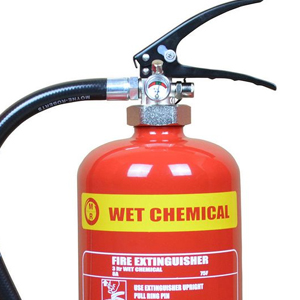
Wet Chemical Fire Extinguishers
Used specifically for Fire Risk class F – deep fat cooking fires.
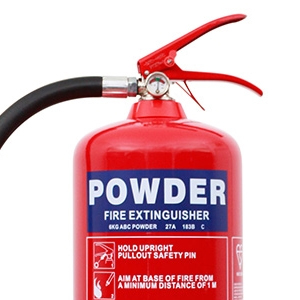
Powder Fire Extinguishers
Used for Class A fires (wood, paper, material, cloth, etc), Class B (flammable liquids such as petrol, spirits, diesel), Class C (flammable gas) and also electrical hazards.
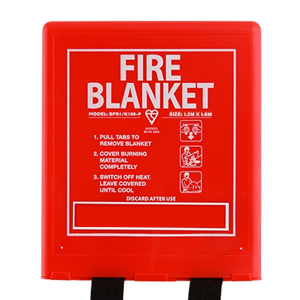
Fire Blankets
Commonly used for chip pan fires and toasters (kitchen fire risks) but also used for waste bins and in laboratories.

Emergency lighting
Emergency lighting is designed to provide adequate illumination during a mains power failure. In addition to marking fire exits, strategically placed emergency lights ensure essential lighting along escape routes, including steps, stairways, directional changes, and key points like fire equipment and first aid stations.
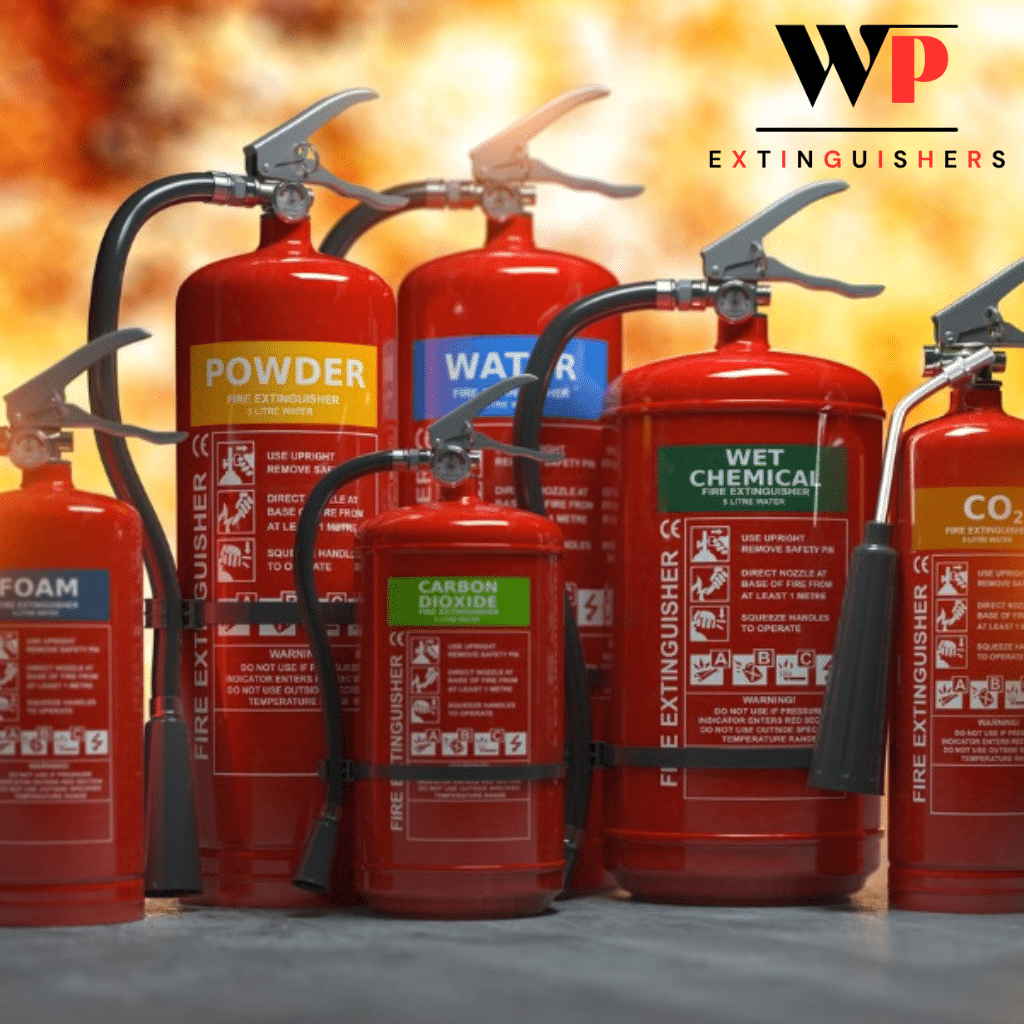
Fire Extinguishers
Under the Regulatory Reform (Fire Safety) Order 2005, article 13, all business premises must install and maintain portable fire extinguishers. They must be of the right type for the identified risks and positioned in the correct locations with adequate signage. This also forms part of BS 5306 part 8.
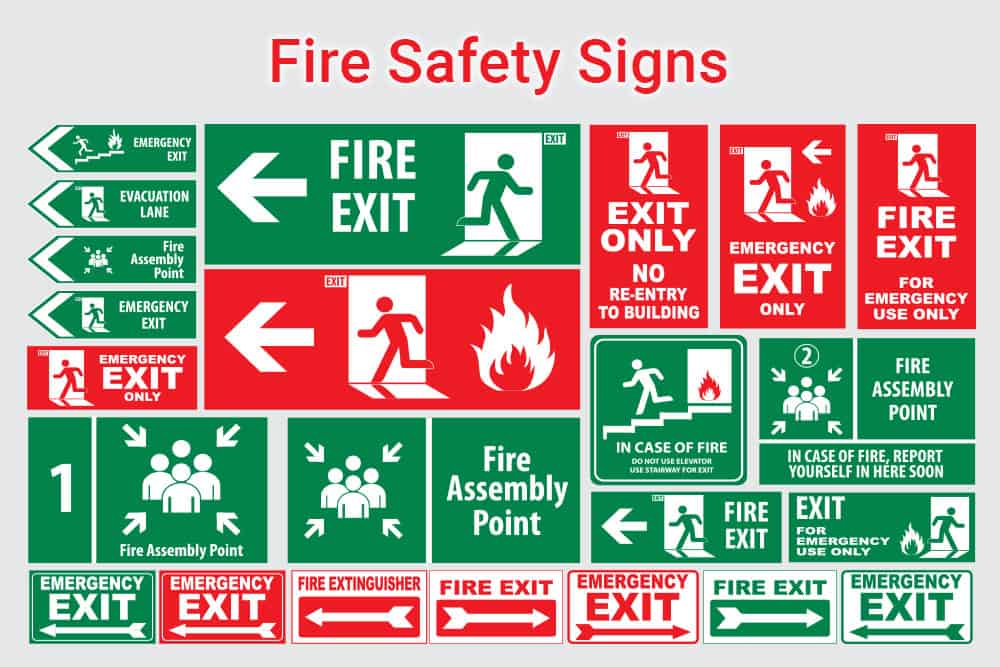
Safety Signage
It is essential for buildings to have appropriate fire exit signage to facilitate safe evacuation and provide instructions on the use of fire equipment.
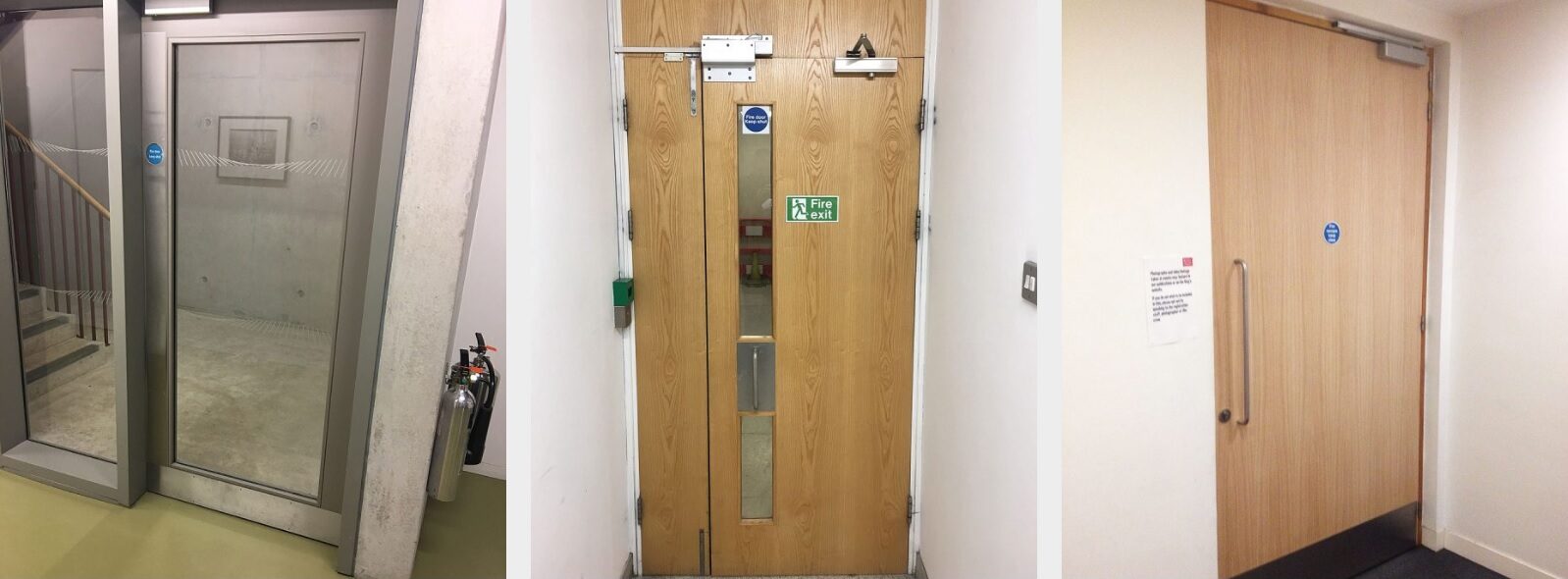
Fire Door Inspection
At WP Extinguishers, we understand that fire doors are critical components of any fire safety strategy. Our expert Fire Door Inspection service ensures that your fire doors are fully compliant with regulations and capable of safeguarding lives and property in the event of a fire.
WP Extinguishers & Comprehensive Fire Safety Services
Professional fire extinguisher servicing & fire safety and security solutions.
High-quality Fire Extinguishers for Your Safety Needs
Choose from a range of fire extinguishers to suit your specific requirements
Maintenance – Service – Installation
Clear and Effective Fire Safety Signage Solutions
Effective fire signage to keep your premises safe and compliant
Maintenance – Service – Installation

Emergency lighting
Emergency lighting system is designed to provide adequate illumination during a mains power failure. In addition to marking fire exits
Maintenance – Service – Installation
Fire Door Inspections
we understand that fire doors are critical components of any fire safety strategy. Our expert Fire Door Inspection service
Independent Fire Engineering & Distributors Association
Accreditation IFEDA, the Independent Fire Engineering & Distributors Association, was founded in 1989, to provide an independent representative body of fire trade companies. IFEDA is completely unaligned to any manufacturer.
As a member, WP Extinguishers have had to demonstrate that the company has achieved and maintained a quality system in accordance with BS EN ISO 9001:2015
Also Passed examination in theory and practice of servicing portable fire extinguishers.
the examination has been approved by the british standards institution and bAFE as satisfying the training requirements of SP101.
the examination has been approved by the british standards institution and bAFE as satisfying the training requirements of SP101.
Contact WP Extinguishers for all your fire Extinguisher requirements.
Our services include Fire Extinguishers, Emergency lighting, Safety Signage, Fire Door Inspection, ensuring a reliable and comprehensive solution.